
Services Overview
How to Select Commercial Stainless Steel Prep Equipment for Real Kitchen Operations
Practical guide to choosing stainless steel prep tables, refrigerated prep tables, sink cabinets and bowl cabinets by workflow, hygiene, heat load, ergonomics, compliance and life-cycle cost.
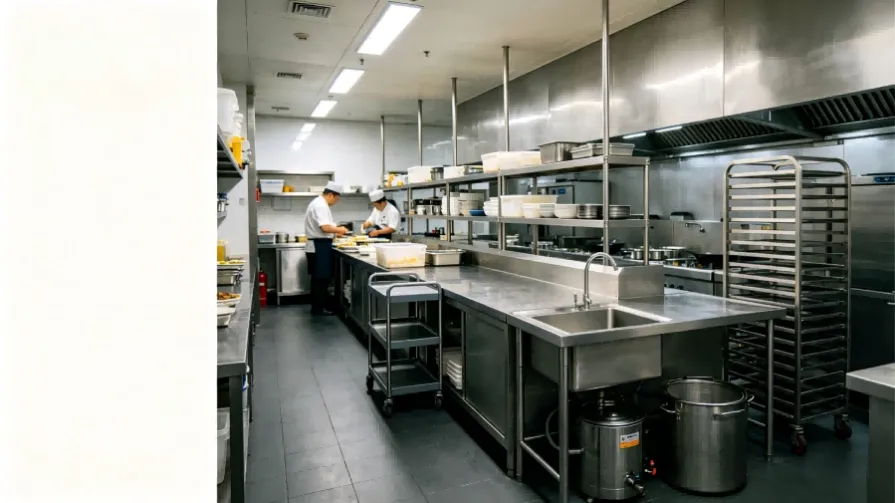
After years of designing commercial kitchens and supporting global equipment procurement projects, I’ve settled on one practical rule: the best stainless steel prep equipment is never the priciest option. It is the one that truly fits your kitchen workflow, staff habits, daily cleaning routines, ventilation conditions, on-site utilities, and long-term after-sales support structure.For importers, distributors, hotel groups, restaurant chains, central kitchens and cloud kitchen operators, stainless steel prep equipment typically covers four core categories: refrigerated prep tables, standard stainless worktables, sink cabinets, and bowl & dish storage cabinets. Though they look straightforward, these foundational units directly determine daily kitchen speed, operational safety, and long-term hygiene consistency.Below is a field-tested buyer’s guide to evaluate equipment before sending out your official RFQ.
1. Design around kitchen workflow, not just floor plans
A commercial kitchen is more than a room filled with equipment. It is a continuous operational cycle: receiving → storage → washing → prep → cooking → plating → service → cleaning → waste disposal.Before finalizing any prep table or sink cabinet layout, identify your actual operational bottlenecks. Do cooks walk excessive distances for ingredients? Do clean and dirty zones overlap? Is handwashing equipment too far from food prep areas? Do refrigerated prep rails require frequent lid openings due to poor on-site storage arrangement?Well-designed stainless steel layouts eliminate redundant steps and cross-traffic:
- Separate raw food prep, ready-to-eat handling, and plating zones clearly
- Position sink cabinets independently to avoid disrupting the main cook line
- Use refrigerated prep tables as dedicated ingredient stations, not substitute walk-in storage
- Place bowl cabinets close to washing and drying areas to prevent floor stacking
- Reserve sufficient counter space beside high-heat equipment such as ovens and fryers
Even fully 304 stainless equipment will slow down your entire service if it forces staff to overreach, bend repeatedly, or cross contaminated zones.
2. Evaluate stainless steel as a full system, not just surface material
Most buyers only ask: “Is this stainless steel?” The smarter question is: Where is 304 grade applied? Where is lower-grade steel used? And how is the whole unit fabricated?For commercial food contact and long-term export use, 304 stainless steel is the reliable baseline for worktops, sink basins, wet zones and exposed panels. It resists corrosion from humidity, salt, acidic ingredients, and repeated chemical cleaning. Lower-grade material is acceptable only for dry, non-food-contact areas — and this must be clearly specified in your contract, not discovered after rust develops on-site.When reviewing quotations, always verify these details:
- Exact material grade for every component: tabletop, body, sink bowl, doors, drawers, shelves and frames
- Steel thickness (gauge), confirmed before and after polishing
- Surface finish quality — #4 brushed is standard for commercial kitchens for better scratch resistance and easy cleaning
- Welding standard: smooth TIG welding, polished seams, no sharp edges, no hidden food residue gaps
- Overall structural rigidity — no bending or shaking under full load
- Sink craftsmanship: deep-drawn or fully welded bowls, rational drain position, overflow protection, sound-dampening and anti-condensation treatment for humid environments
Cheap cabinets look new on day one. Premium-built units stay stable, easy to clean, and structurally tight after months of heavy wet cleaning and daily commercial use.
3. Refrigerated prep tables: prioritize temperature recovery, not just size
A common procurement mistake is selecting refrigerated prep tables only by width and pan capacity. In real kitchen operation, the core value lies in stable temperature recovery under continuous use and high ambient heat.When evaluating refrigerated prep units, confirm these critical parameters:
- Certified ambient temperature rating — essential for hot-climate projects in the GCC, MENA and poorly ventilated busy kitchens
- Low-GWP refrigerants such as R290 or R600a to meet EU and global environmental standards
- Digital smart controller with automatic defrost, temperature alarms and service-friendly access
- GN-compatible pan rail design, insulated lids, stable pan support and hygienic gap treatment
- Flexible base configurations: drawers for fast-service kitchens, solid doors for bulk ingredient storage, mixed layouts for multi-menu operations
- Compressor brand, warranty terms, spare parts availability and regional after-sales support
Tropicalized high-ambient models are strongly recommended for MENA and Mediterranean coastal kitchens, where standard-temperature units often struggle to maintain stability near fryers and griddles.
4. Match sink cabinets to local water, waste and hygiene regulations
Sink cabinets appear simple, but improper selection causes long-term hygiene and plumbing issues. Many projects make the mistake of fixing the entire stainless line first, then choosing sinks based on price — this is reverse engineering.Select sink cabinets according to your actual site conditions:
- Local plumbing layouts and drain specifications
- Faucet hole patterns and compatible tap types
- Bowl size matched to your pots, trays and GN container dimensions
- Need for integrated drainboards
- On-site grease and food waste volume
- Splash zone safety and nearby electrical layout
- Dedicated handwashing versus general warewashing usage
- Water hardness and frequent chemical cleaning exposure
EU projects focus heavily on formal documentation and hygienic design. For MENA coastal projects, priority must go to salt-air corrosion resistance, fully sealed electrical components, and moisture-proof export packaging.
5. Standardize bowl cabinets to organize your clean zone
Many kitchens overinvest in cooking equipment but neglect structured clean storage. The result: clean containers, bowls and pans end up stacked randomly on carts or floors, compromising hygiene and workflow efficiency.Quality bowl and dish storage cabinets should fit your real operational standards, not theoretical maximum capacity. Always check:
- Internal clear height for stacked kitchenware
- Door and drawer opening clearance for easy access
- Fully adjustable shelving options
- Reinforced shelf support and reliable load capacity
- Lockable castors or sturdy adjustable feet for deep cleaning
- Logical distance from washing and drying stations
- Cross-store standardization potential for chain rollouts
Standardizing storage cabinets, worktables and sink units across all store formats simplifies staff training, reduces spare-part inventory, and makes future replacements seamless.
6. Treat CE compliance as a baseline, not a finish line
For EU markets, CE certification is mandatory for all electrical stainless equipment. Professional buyers should never settle for only a logo. Reliable suppliers must provide a complete document package:
- EU Declaration of Conformity
- LVD and EMC test reports for electrical units
- Food contact material compliance statements
- Wiring diagrams, official nameplate data and safety instructions
- Detailed installation, cleaning and maintenance manuals
- Spare parts list and recommended service cycles
For MENA region projects, CE alone is insufficient. Countries including Saudi Arabia, Egypt, Morocco and Algeria require additional local registration, SABER/SASO or G-Mark certification. Always confirm market-specific requirements before mass production.
7. Calculate 5-year total cost, not just upfront price
In commercial kitchen procurement, the lowest FOB price often leads to the highest long-term operational cost.Smart buyers compare total lifecycle value by evaluating:
- Stainless steel grade and actual thickness
- Refrigeration stability and energy consumption
- Compressor warranty and local spare parts accessibility
- Weld durability, hinge quality and structural stability
- Sea-worthy export packaging and moisture protection
- Container loading efficiency to save logistics cost
- Consistent lead-time performance and communication reliability
- Mature OEM and private-label customization capability
- Remote video troubleshooting and fast after-sales response
A slightly higher initial investment avoids recurring rust issues, door replacement, refrigeration downtime and delayed store openings — delivering far better value over five years of heavy commercial use.
8. Practical RFQ checklist for accurate, fast quotations
To eliminate back-and-forth communication and receive precise proposals, provide these details to your supplier:
- Project country, city and exact site conditions
- Kitchen type: restaurant, hotel, QSR, cloud kitchen, central kitchen or catering factory
- Menu type and peak-hour operational volume
- Required equipment range: worktables, sink cabinets, bowl cabinets, refrigerated prep tables or full sets
- Size limitations and preferred equipment depth/width
- GN pan size and quantity for refrigerated prep units
- Door, drawer and internal shelf configuration preferences
- Maximum ambient temperature and ventilation level
- Local voltage, frequency, plug type and manual language requirements
- Required certification documents: CE pack, test reports, food-contact statements, spare parts lists
- Order quantity, target delivery date, destination port and OEM/private-label needs
Final Field Advice
High-quality stainless steel prep equipment should optimize your kitchen operation invisibly: faster staff movement, simpler daily cleaning, consistent food safety, and minimal maintenance headaches.When comparing suppliers, do not only ask “how much.” Ask for verifiable material proof, complete compliance documentation, professional export protection, and reliable long-term after-sales support.If you are launching restaurant, hotel, central kitchen or distribution projects across the EU, Middle East or North Africa, share your floor plans, workflow layout and equipment list. Our team can optimize your prep line configuration, confirm compliant specifications, arrange full CE document sets, and deliver customized OEM solutions with stable production and shipping schedules.